

Locksmith
How to choose a security cylinder
The cylinder is the part you put the key into. It is also what most break-in attempts on a front door target. Here is how to read the standards and avoid paying for features you don't need.
- Price quoted = price paid
- Itemised invoice for your insurer
- Emergency: on site within 2 hours, anywhere in Luxembourg
Reading the EN 1303 standard
The European standard EN 1303 grades cylinders on several criteria: durability, corrosion resistance, key security and attack resistance.
For a front door, focus on the last two digits of the classification code: key security (number of key differs) and attack resistance (drilling, picking, snapping). Higher is better.
VdS and A2P certifications
On top of the standard, some cylinders are tested by independent bodies: VdS (Germany) and A2P (France, rated one, two or three stars).
Many insurers recognise these marks. If your policy requires a lock grade, check which one before you buy.
The protections that really matter
- Anti-snap / anti-pull: stops the cylinder being extracted with a tool. Essential if the cylinder protrudes at all.
- Anti-drill: hardened inserts protect the plug.
- Anti-pick: security pins, complex key profile.
- Emergency function: the door opens even if a key is left in on the inside.
- Key card: copies can only be cut on presentation of the card.
Measuring your cylinder
- Open the door — Find the fixing screw on the edge of the door, level with the lock.
- Measure the outside — From the screw (the centre of the cylinder) to the outer end of the cylinder.
- Measure the inside — From the screw to the inner end. The two sizes often differ, for example 30 × 40 mm.
- Check the protrusion — On the outside, the cylinder should not stick out more than a few millimetres beyond the handle plate.
Our recommendation by type of home
Flat in a residence
An EN 1303 cylinder with good attack resistance and a key card. If the front door is a security door, the cylinder must match the door's level.
Detached house
A high-security, anti-snap cylinder with a protective plate. Don't forget secondary doors (garage, cellar), which are often overlooked.
Shop
A high-security cylinder, possibly on a master-key system if several people hold keys, so access can be withdrawn without changing everything.
When to change your cylinder
- After moving in: you don't know who still has a key.
- After keys are lost or stolen.
- After an attempted break-in, even if the door held.
- When the key sticks, turns badly or bends.
Frequently asked questions
Which cylinder for a flat door?
A euro-profile EN 1303 cylinder with a high attack-resistance grade, anti-snap protection and a key card covers the vast majority of cases.
Can I change the cylinder myself?
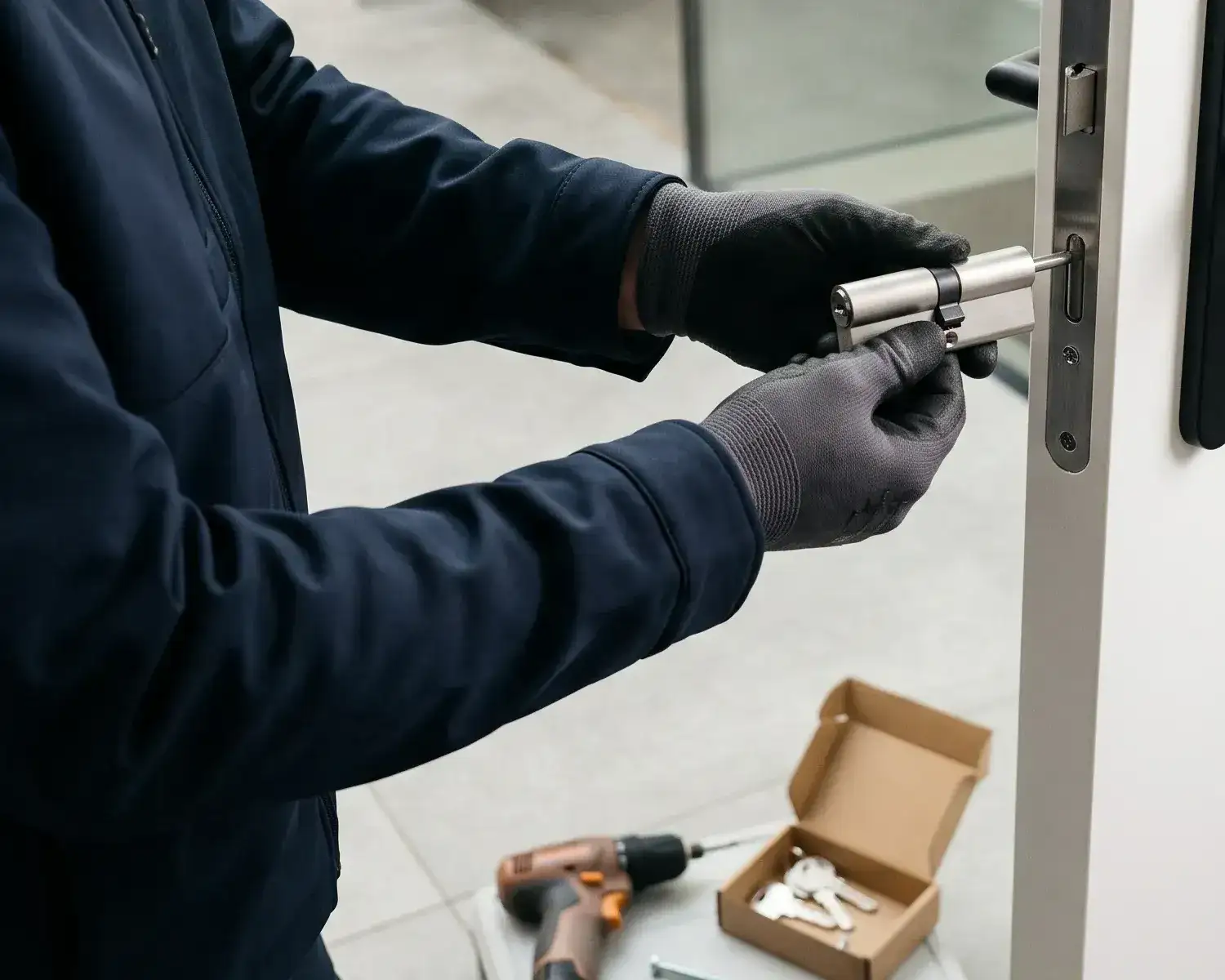
Yes, if you have measured correctly: remove one screw, turn the key a quarter turn and slide the cylinder out. If it is jammed or broken, it is better to call.
Does a more expensive cylinder really protect better?
Only if the extra cost buys a better grade or a certification. Compare EN 1303 codes and test marks, not prices.
Does my insurer require a specific cylinder?
Some policies do, often by referring to a test mark. Read your home insurance conditions before choosing.