
Guides · Locksmith
How to change a lock cylinder yourself, step by step
Changing the cylinder on a front door is something most people can do, on one condition: you're inside, the door is open and you have a key that works. Here's how to measure, which cylinder to buy, how the swap goes, and when you need a locksmith.
- Price quoted = price paid
- Itemised invoice for your insurer
- Emergency: on site within 2 hours, anywhere in Luxembourg
Why change the cylinder on your front door
In most cases only the cylinder needs replacing: the lock and its locking points stay where they are.
- After moving in: you don't know how many copies of the key are out there.
- After losing your keys or having them stolen, especially if your address was with them.
- After an attempted break-in, even if the door held.
- When the key catches or is hard to turn even though the door is properly adjusted: the cylinder is worn.
Before you start: key in hand, door open
This guide is for a door you live behind, opened from the inside, with a key that turns normally. You can't do it without the key: it's what lines up the cam so the cylinder can come out.
Outside without a key, or the key has snapped in the lock? Then it's no longer a DIY job but one for a locksmith: see locked out or key broken in the lock.
Renting? Ask your landlord first and keep the old cylinder: depending on your lease, you may need to put it back when you leave.
What you'll need
- A screwdriver that fits the fixing screw (usually Phillips).
- A tape measure or ruler marked in millimetres.
- Your current key, plus the new cylinder and its keys.
Measure the cylinder in millimetres
Most front doors take a euro cylinder (euro profile). Measure it with the door open, as two sizes taken from the centre of the fixing screw hole, visible on the edge of the door:
- Size A: from the centre of the screw to the end of the cylinder on the outside.
- Size B: from the centre of the screw to the end on the inside.
The two sizes are often different, and two cylinders of the same overall length can have them the other way round. Write them down as outside × inside. On the outside, the cylinder should sit flush with the escutcheon or door handle plate, or stick out by no more than a few millimetres: anything that sticks out gives a grip for snapping it.
Buy the right cylinder
Get a cylinder with the same profile and the same A and B sizes. A standard one is fine for a cellar or internal door; for a front door, choose a security cylinder.
To compare security levels (EN 1303, anti-snap, anti-drill, key registration card), see our guide on choosing a security cylinder. Check your home insurance policy too: it may require a minimum level.
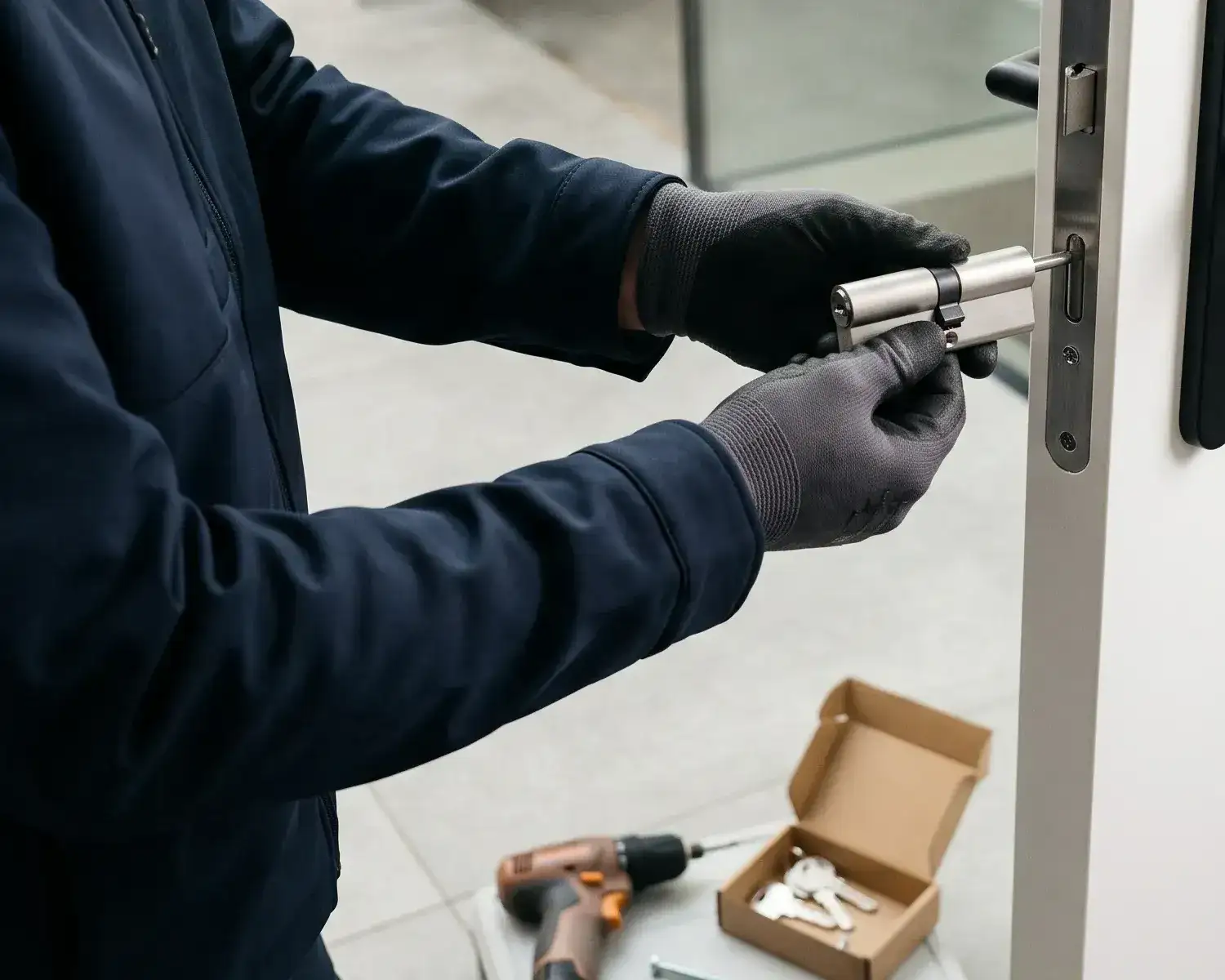
Changing the lock cylinder: the steps
- Open the door and keep it open — Wedge it if needed. Everything is done with the door open, right up to the final test.
- Remove the fixing screw — On the edge of the door, in the faceplate (the metal strip the latch and bolt come out of), there's a screw in line with the cylinder. Undo it completely and keep it.
- Turn the key to line up the cam — Put the key in and turn it slightly one way, then the other, until the cam (the lug in the middle of the cylinder) sits inside the cylinder body and no longer sticks out.
- Slide the old cylinder out — Pull on the key: the cylinder slides out of the lock. If it resists, turn the key a little more and try again, without forcing it.
- Fit the new cylinder — With the key in and the cam lined up the same way, slide it into the lock, side A facing out. Put the screw back: snug but not forced, it should hold the cylinder without jamming it.
- Test before closing the door — With the door open, try every key from both sides: the bolt should go in and out without forcing. Then close the door and test again.
Multipoint locks: the method is the same, only the cylinder is changed. These doors are often thicker, so the sizes are longer: measure carefully.
If the cylinder won't come out
Usually the cam isn't lined up: turn the key a few degrees the other way and try again. Don't hammer or lever it: you could damage the lock, which costs more to replace than the cylinder. If the screw is seized, its head is chewing up, or the cylinder stays stuck even with the key, stop and call a locksmith.
Should I oil the new cylinder?
Not with oil or grease: they collect dust and eventually gum up the mechanism. If the key catches, use a dry lock lubricant (graphite or PTFE).
When to call a locksmith
To have one fitted at your home, see our lock cylinder replacement page. Send us a photo of the lock from the front and of the door edge on WhatsApp: we check the sizes and give you the fitted price before we come. The quote is free.
- You don't have the key, or you're outside with the door shut: the cylinder won't come out without lining up the cam. We ask for proof that you live there.
- The key has broken off in the cylinder.
- After a break-in, the faceplate or lock is bent: see after a burglary.
- The screw is seized or the cylinder is stuck.
- You're unsure about the model or the sizes: the wrong cylinder gets bought twice.
Frequently asked questions
Can you change a lock cylinder without the key?
Not with this guide: without the key the cam won't line up and the cylinder won't come out. It's a job for a locksmith, who will ask for proof that you live there.
Lock cylinder, euro cylinder, barrel: are they the same thing?
Yes, they're names for the same part: the one the key goes into, held in the lock by a single fixing screw. Euro cylinder refers to the usual shape.
How do I know if a lock cylinder is worn out?
The key catches, is hard to turn or has to be held a certain way. If it turns fine with the door open but badly with it shut, it's more likely the door rubbing and needing adjustment.
Can I change the cylinder on a garage door?
Yes, if it has a euro cylinder held by a screw: same method. Some up-and-over doors use a manufacturer-specific cylinder: note the reference or send us a photo.
How much does a locksmith charge to change a cylinder?
It depends on the security level and the sizes. With us, the quote is free and you get the fitted price including VAT before we travel.